

The answer is: an LED light. Specifically, this is an LED high emulation candle light.
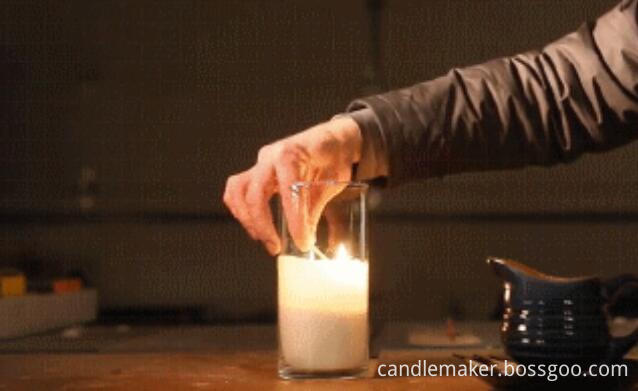
But in the eyes of oil pipe broadcaster Keith, these commercially available candle lights are all weak. They are actually controlled by switches. The "fire" is stable and does not move, and it cannot be blown out. This is no soul! So, he personally went into battle and started DIY, which is a more realistic candle light in all aspects.

Under the camouflage of a glass cup wrapped in wax wall, it is actually a series of electronic parts centered on the Arduino Pro Mini microcontroller.
The six LED lights that are responsible for producing the candlelight. Why do you want six? Because a lamp can't perfectly restore the candle flare and flicker with the airflow. These six LEDs are independently controlled and will randomly change the brightness, which together create a "jumping" flare. (Of course, the shape of the flame is not there, so cover the glass with a layer of wax oil to hide them behind)
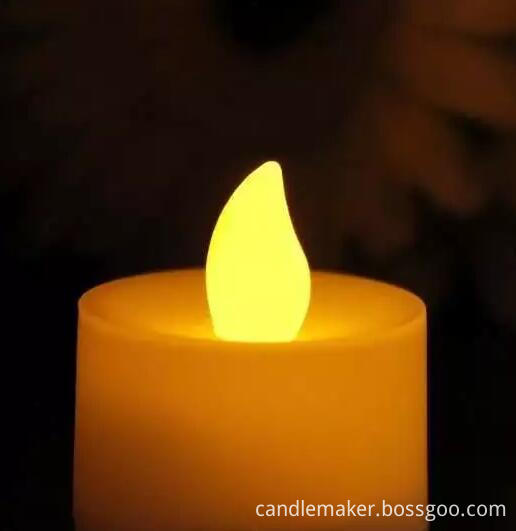
Of course, after "igniting", you need to have a "blowing out" link, and you must float a smog like a real candle. How is this done? The one responsible for detecting the blow is a microphone, and the one responsible for forming the smoke is a "wick" made of fiberglass. The "wick" is immersed in glycerin, which can generate smoke when heated by electricity (in fact, this is also the principle that many electronic cigarettes produce smoke...).
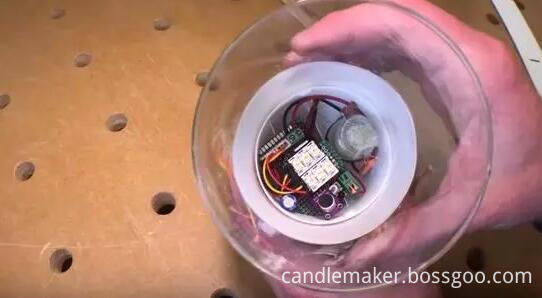
The principle may not be complicated, but it takes a lot of effort to make this high-like candle light. Keith said that the project was finally completed in three years (of course, most of the time is doing something else).
My feelings about this are: very good, but it is really unnecessary...